
The Implementing and Administering Cisco Solutions (200-301 CCNA) v1.1 (200-301)
Passing Cisco CCNA exam ensures for the successful candidate a powerful array of professional and personal benefits. The first and the foremost benefit comes with a global recognition that validates your knowledge and skills, making possible your entry into any organization of your choice.


200-301 Exam Dumps
- Exam Code: 200-301
- Vendor: Cisco
- Certifications: CCNA
- Exam Name: Implementing and Administering Cisco Solutions (200-301 CCNA) v1.1
Why CertAchieve is Better than Standard 200-301 Dumps
In 2026, Cisco uses variable topologies. Basic dumps will fail you.
| Quality Standard | Generic Dump Sites | CertAchieve Premium Prep |
|---|---|---|
| Technical Explanation | None (Answer Key Only) | Step-by-Step Expert Rationales |
| Syllabus Coverage | Often Outdated (v1.0) | 2026 Updated (Latest Syllabus) |
| Scenario Mastery | Blind Memorization | Conceptual Logic & Troubleshooting |
| Instructor Access | No Post-Sale Support | 24/7 Professional Help |
Customers Passed Exams
31
Success backed by proven exam prep tools
Questions Came Word for Word
86%
Real exam match rate reported by verified users
Average Score in Real Testing Centre
94%
Consistently high performance across certifications
Study Time Saved With CertAchieve
60%
Efficient prep that reduces study hours significantly
Coverage of Official Cisco 200-301 Exam Domains
Our curriculum is meticulously mapped to the Cisco official blueprint.
IP Connectivity (25%)
Master OSPFv2 configuration, Static Routing, and Inter-VLAN routing logic.
Network Access (20%)
Detailed coverage of STP, EtherChannel, and Wireless Architectures.
Security Fundamentals (15%)
Mastering WPA3, DHCP Snooping, Dynamic ARP Inspection (DAI), and SSH protocols.
Automation & Programmability (10%)
Understanding JSON, REST APIs, Puppet, Chef, and SDN Controllers.
Cisco 200-301 Exam Domains Q&A
Certified instructors verify every question for 100% accuracy, providing detailed, step-by-step explanations for each.
Question 1
Cisco 200-301
QUESTION DESCRIPTION:
Refer to the exhibit.
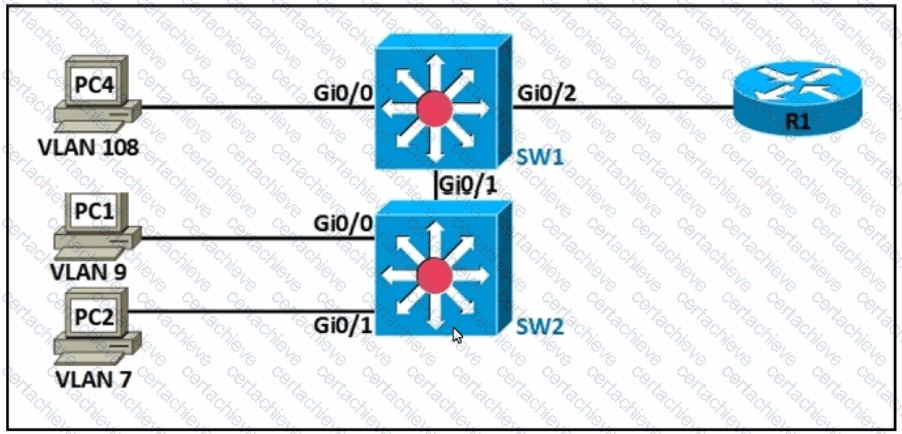
The SW1 and SW2 Gi0/0 ports have been preconfigured. An engineer is given these requirements:
• Allow all PCs to communicate with each other at Layer 3.
• Configure untagged traffic to use VLAN 5.
• Disable VLAN 1 from being used.
Which configuration set meets these requirements?
Correct Answer & Rationale:
Answer: C
Explanation:
SW#1 -interface Gi0/1switchport mode trunkswitchport trunk allowed vlan 5,7,9,108switchport trunk native vlan 5interface Gi0/2switchport mode trunkswitchport trunk allowed vlan 5,7,9,108SW2#interface Gi0/1switchport mode accessswitchport access vlan 7interface Gi0/7switchport mode trunkswitchport trunk allowed vlan 5,7,9,108switchport trunk native vlan 5. Cisco wireless design separates RF behavior, client authentication, encryption, AP operating mode, and controller management. A WLC centralizes WLAN configuration and AP control, while lightweight APs use CAPWAP to register and exchange control/data information with the controller. Security choices such as WPA2/AES and WPA3/SAE are not interchangeable with older mechanisms such as WEP, TKIP, or RC4. RF questions also depend on channel planning: adjacent cells should avoid overlapping channels, and 5-GHz preference features reduce congestion in the 2.4-GHz band. The incorrect options generally confuse AP mode, authentication, encryption, or controller responsibilities. Cisco CCNA 200-301 v1.1 includes these items because wireless failures often come from using the right-looking feature in the wrong part of the WLAN design. The selected answer is the Cisco-consistent configuration or behavior for this wireless scenario.
Question 2
Cisco 200-301
QUESTION DESCRIPTION:
What happens when a switch receives a frame with a destination MAC addresss that recently aged out?
Correct Answer & Rationale:
Answer: D
Explanation:
The switch floods the frame to all ports in the VLAN except the port that received the frame.. Layer 2 switching behavior is driven by VLAN membership, MAC learning, trunk encapsulation, STP state, and EtherChannel negotiation. Cisco switches learn source MAC addresses on ingress, flood unknown unicasts within the same VLAN, and forward known unicasts only out the port associated with the destination MAC address. Trunk and EtherChannel questions must be solved on the logical interface and with the correct negotiation protocol: LACP uses active/passive, PAgP uses desirable/auto, and static mode uses on. STP and PortFast questions depend on whether the port is intended for an endpoint or part of the switched topology. The wrong choices usually apply the correct feature to the wrong port type or violate the required negotiation behavior. Cisco CCNA 200-301 v1.1 emphasizes these details because a single incorrect Layer 2 setting can create loops, VLAN leaks, or failed host connectivity. The selected answer matches Cisco switching operation.
Question 3
Cisco 200-301
QUESTION DESCRIPTION:
Which interface is used to send traffic to the destination network?
O 10.18.75.113/27 [110/6906] via GO/6
O 10.18.75.113/27 [110/23018] via GO/3
R 10.18.75.113/27 [120/16] via GO/16
R 10.18.75.113/27 [120/14] via GO/23
Correct Answer & Rationale:
Answer: D
Explanation:
G0/6. Cisco wireless design separates RF behavior, client authentication, encryption, AP operating mode, and controller management. A WLC centralizes WLAN configuration and AP control, while lightweight APs use CAPWAP to register and exchange control/data information with the controller. Security choices such as WPA2/AES and WPA3/SAE are not interchangeable with older mechanisms such as WEP, TKIP, or RC4. RF questions also depend on channel planning: adjacent cells should avoid overlapping channels, and 5-GHz preference features reduce congestion in the 2.4-GHz band. The incorrect options generally confuse AP mode, authentication, encryption, or controller responsibilities. Cisco CCNA 200-301 v1.1 includes these items because wireless failures often come from using the right-looking feature in the wrong part of the WLAN design. The selected answer is the Cisco-consistent configuration or behavior for this wireless scenario.
Question 4
Cisco 200-301
QUESTION DESCRIPTION:
Refer to the exhibit.
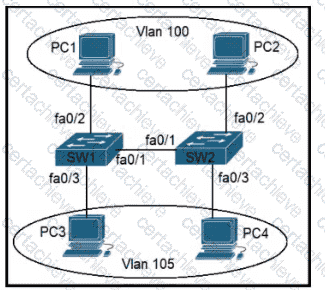
An engineer configures interface fa0/1 on SW1 and SW2 to pass traffic from two different VLANs. For security reasons, company policy requires the native VLAN to be set to a nondefault value. Which configuration meets this requirement?
A)
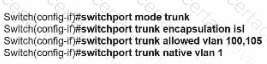
B)

C)

D)
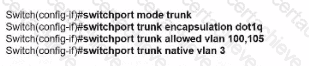
Correct Answer & Rationale:
Answer: D
Explanation:
Option D. Cisco wireless design separates RF behavior, client authentication, encryption, AP operating mode, and controller management. A WLC centralizes WLAN configuration and AP control, while lightweight APs use CAPWAP to register and exchange control/data information with the controller. Security choices such as WPA2/AES and WPA3/SAE are not interchangeable with older mechanisms such as WEP, TKIP, or RC4. RF questions also depend on channel planning: adjacent cells should avoid overlapping channels, and 5-GHz preference features reduce congestion in the 2.4-GHz band. The incorrect options generally confuse AP mode, authentication, encryption, or controller responsibilities. Cisco CCNA 200-301 v1.1 includes these items because wireless failures often come from using the right-looking feature in the wrong part of the WLAN design. The selected answer is the Cisco-consistent configuration or behavior for this wireless scenario.
Question 5
Cisco 200-301
QUESTION DESCRIPTION:
Which two capabilities of Cisco DNA Center make it more extensible as compared to traditional campus device management? (Choose two.)
Correct Answer & Rationale:
Answer: A, C
Explanation:
Answer A,C is correct: A. REST APIs that allow for external applications to interact natively; C. SDKs that support interaction with third-party network equipment. Layer 2 switching behavior is driven by VLAN membership, MAC learning, trunk encapsulation, STP state, and EtherChannel negotiation. Cisco switches learn source MAC addresses on ingress, flood unknown unicasts within the same VLAN, and forward known unicasts only out the port associated with the destination MAC address. Trunk and EtherChannel questions must be solved on the logical interface and with the correct negotiation protocol: LACP uses active/passive, PAgP uses desirable/auto, and static mode uses on. STP and PortFast questions depend on whether the port is intended for an endpoint or part of the switched topology. The wrong choices usually apply the correct feature to the wrong port type or violate the required negotiation behavior. Cisco CCNA 200-301 v1.1 emphasizes these details because a single incorrect Layer 2 setting can create loops, VLAN leaks, or failed host connectivity. The selected answer matches Cisco switching operation.
Question 6
Cisco 200-301
QUESTION DESCRIPTION:
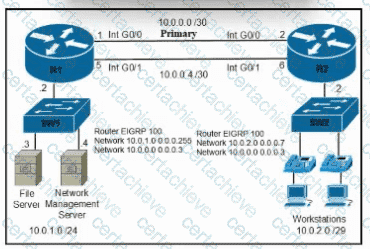
Refer to the exhibit. A secondary route is required on router R1 to pass traffic to the LAN network on R2 if the primary link fails. Which command must be entered to configure the router?
Correct Answer & Rationale:
Answer: B
Explanation:
ip route 10.0.2.0 255.255.255.248 10.0.0.6 91. Cisco routing logic is deterministic: a router first matches the most specific destination prefix, then uses administrative distance when competing route sources advertise the same prefix, and finally evaluates the protocol metric when multiple paths remain inside the same routing protocol. First-hop redundancy protocols add a separate default-gateway resiliency function for hosts on a LAN. The other choices in this question either point to the wrong route-selection rule, confuse a protocol metric with administrative distance, or apply a Layer 2 concept where a Layer 3 forwarding decision is required. In production, that mistake would create blackholing, asymmetric routing, or a backup path that never activates. Cisco CCNA 200-301 v1.1 tests this because route selection is fundamental to troubleshooting reachability. The selected answer matches the behavior Cisco routers use when forwarding traffic or maintaining gateway redundancy.
Question 7
Cisco 200-301
QUESTION DESCRIPTION:
What is used to identify spurious DHCP servers?
Correct Answer & Rationale:
Answer: D
Explanation:
DHCPOFFER. IP services questions are about the supporting protocols that make a network manageable and usable: DHCP supplies addressing information, DNS resolves names, NAT translates address spaces, NTP synchronizes time, syslog records events, SNMP monitors devices, and QoS classifies or prioritizes traffic. Cisco IOS commands are precise; a similar-looking command can configure a client, a relay, a pool, or a server role depending on context. The incorrect options typically name real services but solve a different operational problem. Cisco CCNA 200-301 v1.1 includes these topics because production networks fail just as often from broken services as from broken routing. The chosen answer is the one that performs the exact function in the scenario, whether that is file transfer, address assignment, logging level selection, monitoring security, or traffic treatment.
Question 8
Cisco 200-301
QUESTION DESCRIPTION:
Refer to the exhibit.
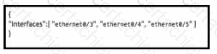
Which types of JSDN data is shown
Correct Answer & Rationale:
Answer: C
Explanation:
String. Automation and programmability questions test whether the engineer can separate data format, transport method, controller role, and API direction. REST commonly uses HTTP methods such as GET, POST, PUT, and DELETE. JSON represents structured data with objects, arrays, strings, numbers, Booleans, and null values. Northbound APIs allow applications to interact with a controller, while southbound APIs allow the controller to communicate with network devices. NETCONF and RESTCONF are configuration/management protocols, not generic forwarding behaviors. The incorrect choices often mix controller-to-device communication with application-to-controller communication or confuse a data format with a protocol. Cisco CCNA 200-301 v1.1 includes this area because modern network operations increasingly rely on APIs and centralized controllers. The selected answer matches the correct API direction, data representation, or HTTP operation for the scenario.
Question 9
Cisco 200-301
QUESTION DESCRIPTION:
A network engineer starts to implement a new wirelesss LAN by configuring the authentication server and creating the dynamic Interface. What must be performed next to complete the basic configuration?
Correct Answer & Rationale:
Answer: D
Explanation:
Create the new WLAN and bind the dynamic interface to It.. Cisco wireless design separates RF behavior, client authentication, encryption, AP operating mode, and controller management. A WLC centralizes WLAN configuration and AP control, while lightweight APs use CAPWAP to register and exchange control/data information with the controller. Security choices such as WPA2/AES and WPA3/SAE are not interchangeable with older mechanisms such as WEP, TKIP, or RC4. RF questions also depend on channel planning: adjacent cells should avoid overlapping channels, and 5-GHz preference features reduce congestion in the 2.4-GHz band. The incorrect options generally confuse AP mode, authentication, encryption, or controller responsibilities. Cisco CCNA 200-301 v1.1 includes these items because wireless failures often come from using the right-looking feature in the wrong part of the WLAN design. The selected answer is the Cisco-consistent configuration or behavior for this wireless scenario.
Question 10
Cisco 200-301
QUESTION DESCRIPTION:
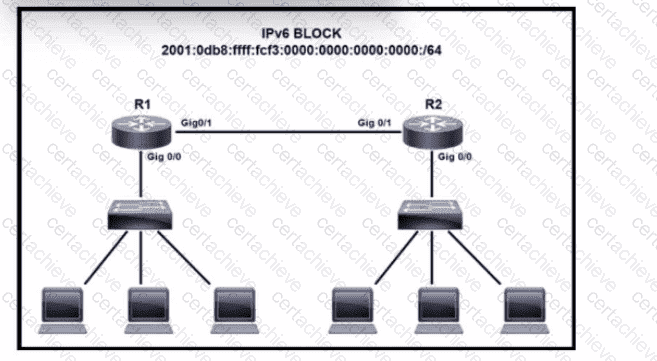
Refer to the exhibit. IPv6 is being Implemented within the enterprise. The command Ipv6 unlcast-routing is configure. Interlace GlgO/0 on R1 must be configured to provide a dynamic assignment using the assigned IPv6 block Which command accomplishes this task?
Correct Answer & Rationale:
Answer: C
Explanation:
ipv6 addresss 2001:DB8:FFFF:FCF3::/64 eui-64. Network fundamentals questions require careful attention to address scope, media type, cabling limits, topology design, virtualization, cloud service models, and the difference between TCP and UDP. The CCNA 200-301 v1.1 blueprint expects candidates to identify not only definitions but also the operational consequence of each choice. For example, public and private addressing have different routing behavior; fiber and copper use different physical media; TCP and UDP make different reliability tradeoffs; and virtualization abstracts physical resources through a hypervisor. The wrong answers are usually plausible terms from the same area, but they do not match the exact condition described in the question. The selected answer is correct because it is the only option that fits the stated network behavior, design requirement, or physical/logical property. That is the level of precision needed for Cisco troubleshooting and implementation work.

Verified by Certified Instructors
This Cisco 200-301 study pack was audited and verified on September 22, 2026 by Radia Davenport,. We ensure every technical rationale aligns with real-world enterprise standards.
A Stepping Stone for Enhanced Career Opportunities
Your profile having CCNA certification significantly enhances your credibility and marketability in all corners of the world. The best part is that your formal recognition pays you in terms of tangible career advancement. It helps you perform your desired job roles accompanied by a substantial increase in your regular income. Beyond the resume, your expertise imparts you confidence to act as a dependable professional to solve real-world business challenges.
Your success in Cisco 200-301 certification exam makes your visible and relevant in the fast-evolving tech landscape. It proves a lifelong investment in your career that give you not only a competitive advantage over your non-certified peers but also makes you eligible for a further relevant exams in your domain.
What You Need to Ace Cisco Exam 200-301
Achieving success in the 200-301 Cisco exam requires a blending of clear understanding of all the exam topics, practical skills, and practice of the actual format. There's no room for cramming information, memorizing facts or dependence on a few significant exam topics. It means your readiness for exam needs you develop a comprehensive grasp on the syllabus that includes theoretical as well as practical command.
Here is a comprehensive strategy layout to secure peak performance in 200-301 certification exam:
- Develop a rock-solid theoretical clarity of the exam topics
- Begin with easier and more familiar topics of the exam syllabus
- Make sure your command on the fundamental concepts
- Focus your attention to understand why that matters
- Ensure hands-on practice as the exam tests your ability to apply knowledge
- Develop a study routine managing time because it can be a major time-sink if you are slow
- Find out a comprehensive and streamlined study resource for your help
Ensuring Outstanding Results in Exam 200-301!
In the backdrop of the above prep strategy for 200-301 Cisco exam, your primary need is to find out a comprehensive study resource. It could otherwise be a daunting task to achieve exam success. The most important factor that must be kep in mind is make sure your reliance on a one particular resource instead of depending on multiple sources. It should be an all-inclusive resource that ensures conceptual explanations, hands-on practical exercises, and realistic assessment tools.
Certachieve: A Reliable All-inclusive Study Resource
Certachieve offers multiple study tools to do thorough and rewarding 200-301 exam prep. Here's an overview of Certachieve's toolkit:
Cisco 200-301 PDF Study Guide
This premium guide contains a number of Cisco 200-301 exam questions and answers that give you a full coverage of the exam syllabus in easy language. The information provided efficiently guides the candidate's focus to the most critical topics. The supportive explanations and examples build both the knowledge and the practical confidence of the exam candidates required to confidently pass the exam. The demo of Cisco 200-301 study guide pdf free download is also available to examine the contents and quality of the study material.
Cisco 200-301 Practice Exams
Practicing the exam 200-301 questions is one of the essential requirements of your exam preparation. To help you with this important task, Certachieve introduces Cisco 200-301 Testing Engine to simulate multiple real exam-like tests. They are of enormous value for developing your grasp and understanding your strengths and weaknesses in exam preparation and make up deficiencies in time.
These comprehensive materials are engineered to streamline your preparation process, providing a direct and efficient path to mastering the exam's requirements.
Cisco 200-301 exam dumps
These realistic dumps include the most significant questions that may be the part of your upcoming exam. Learning 200-301 exam dumps can increase not only your chances of success but can also award you an outstanding score.
The 200-301 Exam Dumps were highly accurate and covered Cisco networking fundamentals, IP connectivity, automation, and security topics thoroughly. The Practice Test gave me the confidence needed to pass.
Chloe Bryant
Jun 2, 2026
The timed practice test felt identical to the 120-minute Pearson VUE environment, especially the drag-and-drop items.
Jack
Mar 11, 2026
I struggled with the practice question sets on JSON and REST APIs until I used the detailed answer explanations.
Noah
Mar 11, 2026
Validated my knowledge of Generative AI and ML impact on network ops through a full-length practice test.
Oliver
Mar 11, 2026
A specific practice question on Cisco AI Endpoint Analytics helped me understand the 2026 security objectives.
James
Mar 11, 2026
Top Exams & Certification Providers
New & Trending
- New Released Exams
- Related Exam
- Hot Vendor
Verified Performance Reports
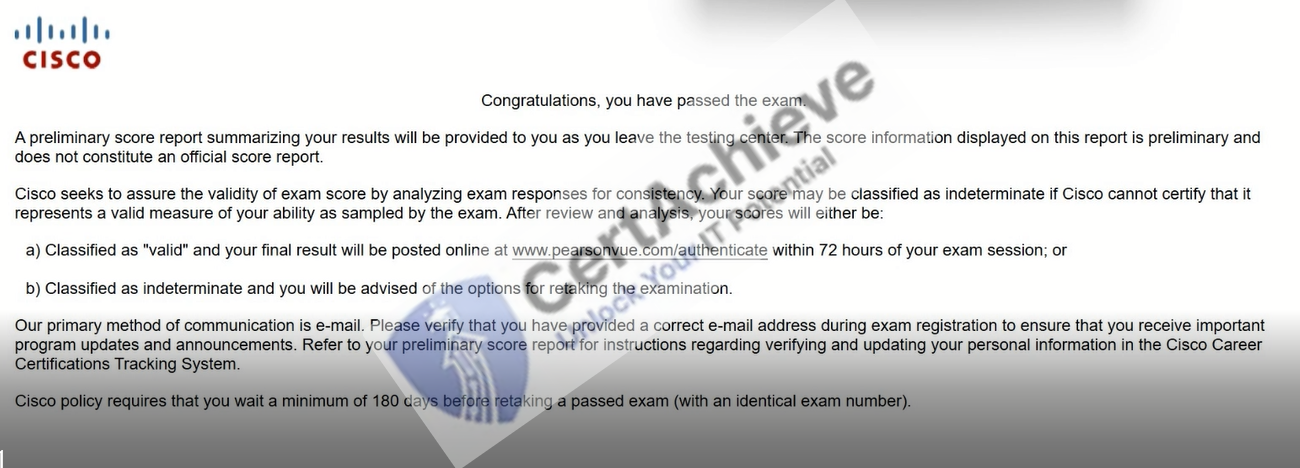
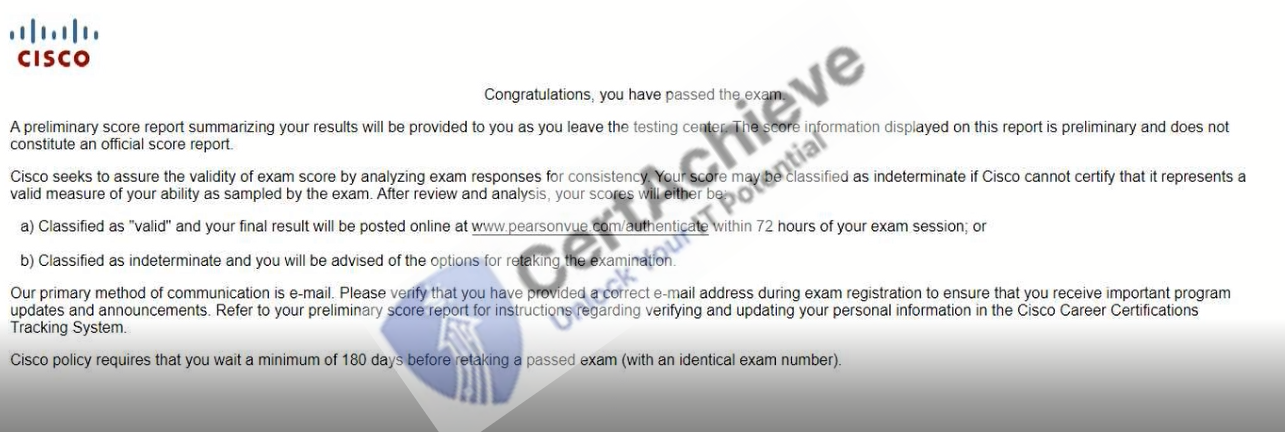
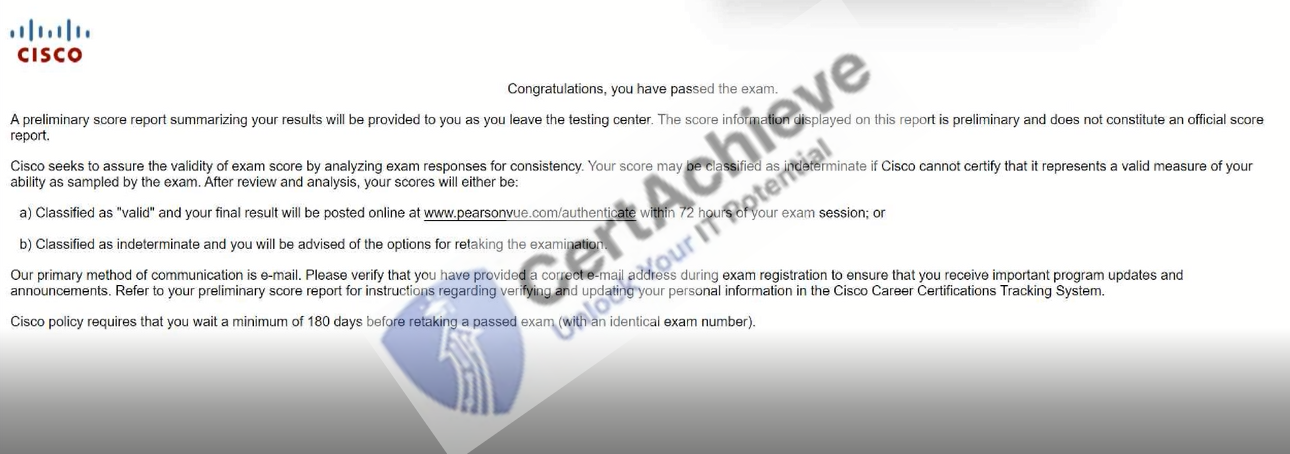
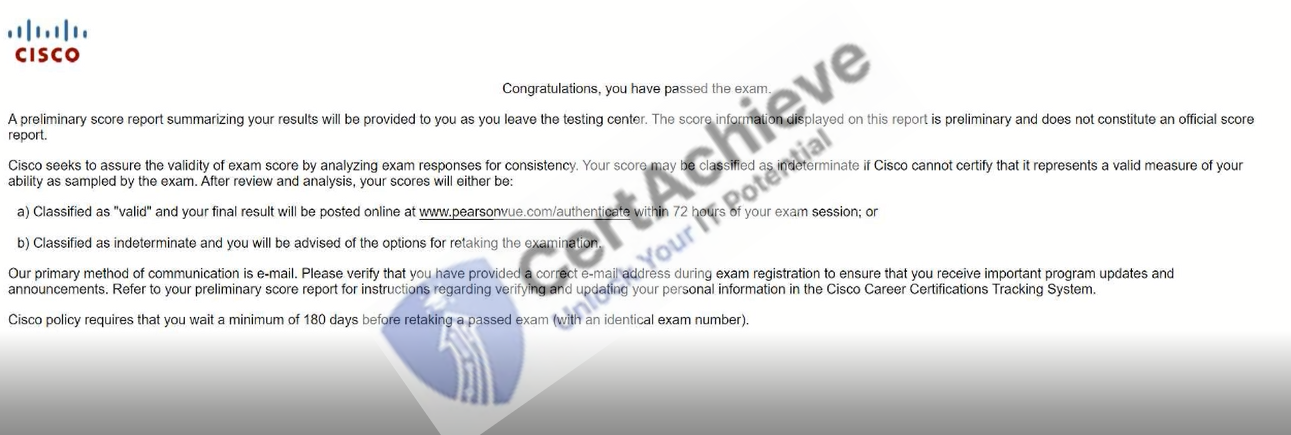
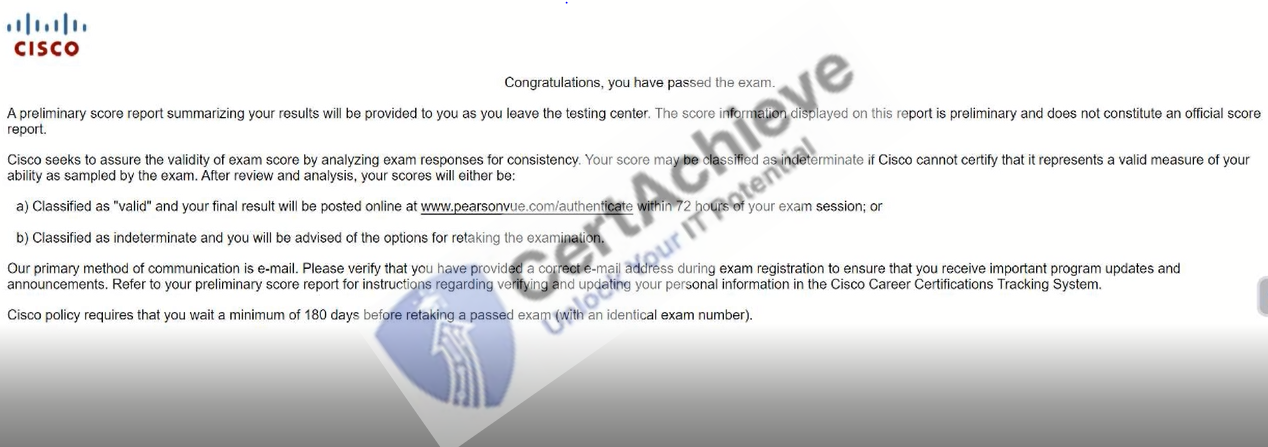
Authentic score reports from candidates who cleared the 200-301 exam.
Verified Case #1
Verified Case #2
Verified Case #3
Verified Case #4
Verified Case #5
×
![]()