
The Designing and Implementing Microsoft Azure Networking Solutions (AZ-700)
Passing Microsoft Microsoft Certified: Azure Network Engineer Associate exam ensures for the successful candidate a powerful array of professional and personal benefits. The first and the foremost benefit comes with a global recognition that validates your knowledge and skills, making possible your entry into any organization of your choice.
AZ-700 Exam Dumps
- Exam Code: AZ-700
- Vendor: Microsoft
- Certifications: Microsoft Certified: Azure Network Engineer Associate
- Exam Name: Designing and Implementing Microsoft Azure Networking Solutions
Why CertAchieve is Better than Standard AZ-700 Dumps
In 2026, Microsoft uses variable topologies. Basic dumps will fail you.
| Quality Standard | Generic Dump Sites | CertAchieve Premium Prep |
|---|---|---|
| Technical Explanation | None (Answer Key Only) | Step-by-Step Expert Rationales |
| Syllabus Coverage | Often Outdated (v1.0) | 2026 Updated (Latest Syllabus) |
| Scenario Mastery | Blind Memorization | Conceptual Logic & Troubleshooting |
| Instructor Access | No Post-Sale Support | 24/7 Professional Help |
Customers Passed Exams
10
Success backed by proven exam prep tools
Questions Came Word for Word
91%
Real exam match rate reported by verified users
Average Score in Real Testing Centre
93%
Consistently high performance across certifications
Study Time Saved With CertAchieve
60%
Efficient prep that reduces study hours significantly
Coverage of Official Microsoft AZ-700 Exam Domains
Our curriculum is meticulously mapped to the Microsoft official blueprint.
Design and Implement Core Networking Infrastructure (30%)
Master VNet design, IP addressing, and subnetting. Focus on name resolution using Azure DNS Private Resolver, implementing VNet peering, and managing connectivity at scale with Azure Virtual Network Manager.
Design, Implement, and Manage Connectivity Services (25%)
Deep dive into hybrid networking, including Site-to-Site and Point-to-Site VPNs. Master ExpressRoute circuits, BGP routing, and global transit architectures using Azure Virtual WAN.
Design and Implement Application Delivery Services (25%)
Master regional and global load balancing. Focus on Azure Application Gateway with WAF, Azure Front Door for global L7 delivery, and configuring Azure Traffic Manager for high availability.
Design and Implement Private Access to Azure Services (10%)
Ensuring secure, private communication between resources. Focus on Azure Private Link, creating Private Endpoints, and utilizing Service Endpoints to isolate PaaS traffic from the public internet.
Design and Implement Azure Network Security Services (5%)
Securing the perimeter and internal traffic. Master Azure Firewall, Firewall Manager, and DDoS Protection. Focus on monitoring and diagnostics using Network Watcher and NSG Flow Logs.
Microsoft AZ-700 Exam Domains Q&A
Certified instructors verify every question for 100% accuracy, providing detailed, step-by-step explanations for each.
Question 1
Microsoft AZ-700
QUESTION DESCRIPTION:
Note: This question is part of a series of questions that present the same scenario. Each question in the series contains a unique solution that might meet the stated goals. Some question sets might have more than one correct solution, while others migh t not have a correct solution.
After you answer a question in this section, you will NOT be able to return to it. As a result, these questions will not appear in the review screen.
You have an Azure application gateway that has Azure Web Application Fire wall (WAF) enabled.
You configure the application gateway to direct traffic to the URL of the application gateway.
You attempt to access the URL and receive an HTTP 403 error. You view the diagnostics log and discover the following error.

You need to ensure that the URL is accessible through the application gateway.
Solution: You add a rewrite rule for the host header.
Does this meet the goal?
Correct Answer & Rationale:
Answer: B
Explanation:
https://docs.microsoft.com/en-us/azure/application-gateway/ rewrite-http-headers-url#l imitations
Question 2
Microsoft AZ-700
QUESTION DESCRIPTION:
You have an Azure virtual network that contains a subnet named Subnet1. Subnet1 is associated to a network security group (NSG) named NSG1. NSG1 blocks all outbound traffic that is not allowed explicitly.
Subnet1 contains virtual machines that must communicate with the Azure Cosmos DB service.
You need to create an outbound security rule in NSG1 to enable the virtual machines to connect to Azure Cosmos DB.
What should you include in the solution?
Correct Answer & Rationale:
Answer: A
Explanation:
[Reference:, https://docs.microsoft.com/en-us/azure/virtual-network/service-tags-overview, , , ]
Question 3
Microsoft AZ-700
QUESTION DESCRIPTION:
You need to configure the default route on Vnet2 and Vnet3. The solution must meet the virtual networking requirements.
What should you use to configure the default route?
Correct Answer & Rationale:
Answer: B
Explanation:
[Reference:, https://docs.microsoft.com/en-us/azure/virtual-network/virtual-networks-udr-overview, ]
Question 4
Microsoft AZ-700
QUESTION DESCRIPTION:
You need to provide connectivity to storage1. The solution must meet the PaaS networking requirements and the business requirements.
What should you include in the solution?
Correct Answer & Rationale:
Answer: A
Explanation:
[Reference:, https://docs.microsoft.com/en-us/azure/virtual-network/virtual-network-service-endpoints-overview, , ]
Question 5
Microsoft AZ-700
QUESTION DESCRIPTION:
You need to configure the default route in Vnet2 and Vnet3. The solution must meet the virtual networking requirements.
What should you use to configure the default route?
Correct Answer & Rationale:
Answer: C
Explanation:
VNet 1 will get the default from BGP and propagate it to VNET 2 and 3
Question 6
Microsoft AZ-700
QUESTION DESCRIPTION:
What should you implement to meet the virtual network requirements for the virtual machines that connect to Vnet4 and Vnet5?
Correct Answer & Rationale:
Answer: B
Explanation:
There is no virtual network peering between VM4’s VNet (VNet3) and VM5’s VNet (VNet4). To enable the VMs to communicate over the Microsoft backbone network a VNet peering is required between VNet3 and VNet4.
Question 7
Microsoft AZ-700
QUESTION DESCRIPTION:
You need to configure GW1 to meet the network security requirements for the P2S VPN users.
Which Tunnel type s hould you select in the Point-to-site configuration settings of GW1?
Correct Answer & Rationale:
Answer: D
Explanation:
[Reference:, https://docs.microsoft.com/en-us/azure/vpn-gateway/openvpn-azure-ad-tenant, , ]

Verified by Certified Instructors
This Microsoft AZ-700 study pack was audited and verified on September 23, 2026 by Gene Whitlock,. We ensure every technical rationale aligns with real-world enterprise standards.
A Stepping Stone for Enhanced Career Opportunities
Your profile having Microsoft Certified: Azure Network Engineer Associate certification significantly enhances your credibility and marketability in all corners of the world. The best part is that your formal recognition pays you in terms of tangible career advancement. It helps you perform your desired job roles accompanied by a substantial increase in your regular income. Beyond the resume, your expertise imparts you confidence to act as a dependable professional to solve real-world business challenges.
Your success in Microsoft AZ-700 certification exam makes your visible and relevant in the fast-evolving tech landscape. It proves a lifelong investment in your career that give you not only a competitive advantage over your non-certified peers but also makes you eligible for a further relevant exams in your domain.
What You Need to Ace Microsoft Exam AZ-700
Achieving success in the AZ-700 Microsoft exam requires a blending of clear understanding of all the exam topics, practical skills, and practice of the actual format. There's no room for cramming information, memorizing facts or dependence on a few significant exam topics. It means your readiness for exam needs you develop a comprehensive grasp on the syllabus that includes theoretical as well as practical command.
Here is a comprehensive strategy layout to secure peak performance in AZ-700 certification exam:
- Develop a rock-solid theoretical clarity of the exam topics
- Begin with easier and more familiar topics of the exam syllabus
- Make sure your command on the fundamental concepts
- Focus your attention to understand why that matters
- Ensure hands-on practice as the exam tests your ability to apply knowledge
- Develop a study routine managing time because it can be a major time-sink if you are slow
- Find out a comprehensive and streamlined study resource for your help
Ensuring Outstanding Results in Exam AZ-700!
In the backdrop of the above prep strategy for AZ-700 Microsoft exam, your primary need is to find out a comprehensive study resource. It could otherwise be a daunting task to achieve exam success. The most important factor that must be kep in mind is make sure your reliance on a one particular resource instead of depending on multiple sources. It should be an all-inclusive resource that ensures conceptual explanations, hands-on practical exercises, and realistic assessment tools.
Certachieve: A Reliable All-inclusive Study Resource
Certachieve offers multiple study tools to do thorough and rewarding AZ-700 exam prep. Here's an overview of Certachieve's toolkit:
Microsoft AZ-700 PDF Study Guide
This premium guide contains a number of Microsoft AZ-700 exam questions and answers that give you a full coverage of the exam syllabus in easy language. The information provided efficiently guides the candidate's focus to the most critical topics. The supportive explanations and examples build both the knowledge and the practical confidence of the exam candidates required to confidently pass the exam. The demo of Microsoft AZ-700 study guide pdf free download is also available to examine the contents and quality of the study material.
Microsoft AZ-700 Practice Exams
Practicing the exam AZ-700 questions is one of the essential requirements of your exam preparation. To help you with this important task, Certachieve introduces Microsoft AZ-700 Testing Engine to simulate multiple real exam-like tests. They are of enormous value for developing your grasp and understanding your strengths and weaknesses in exam preparation and make up deficiencies in time.
These comprehensive materials are engineered to streamline your preparation process, providing a direct and efficient path to mastering the exam's requirements.
Microsoft AZ-700 exam dumps
These realistic dumps include the most significant questions that may be the part of your upcoming exam. Learning AZ-700 exam dumps can increase not only your chances of success but can also award you an outstanding score.
The AZ-700 Exam Dumps included practical networking scenarios and detailed explanations for Azure networking solutions, security, and connectivity topics. The PDF Questions were highly accurate.
Wyatt Murphy
Jul 11, 2026
Top Exams & Certification Providers
New & Trending
- New Released Exams
- Related Exam
- Hot Vendor
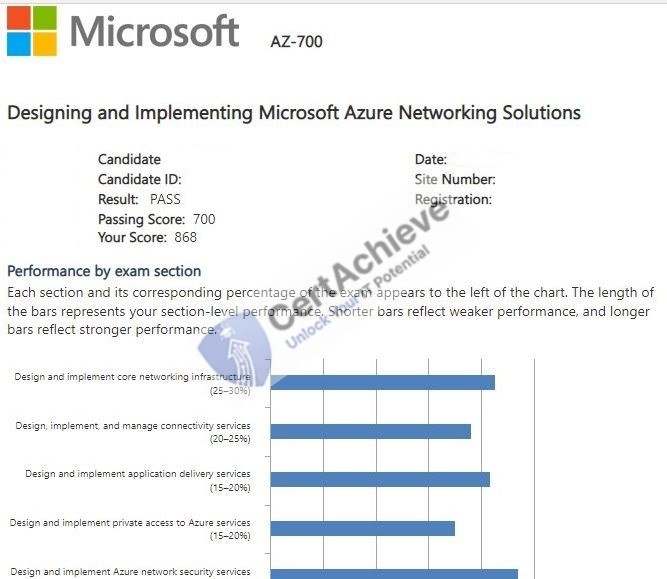
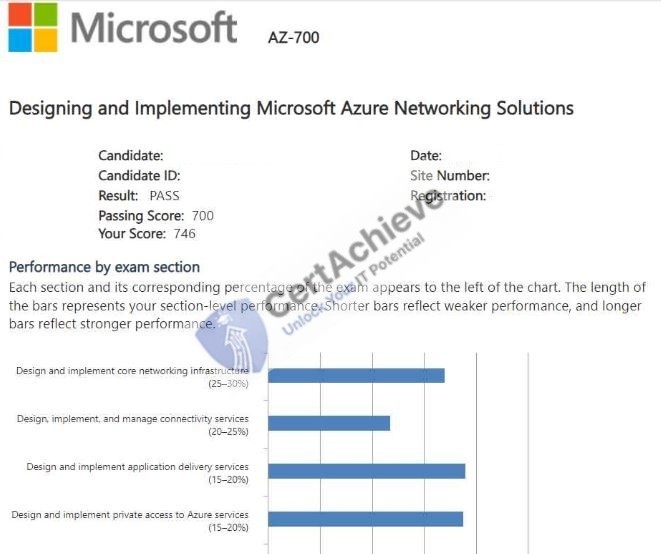
Verified Performance Reports
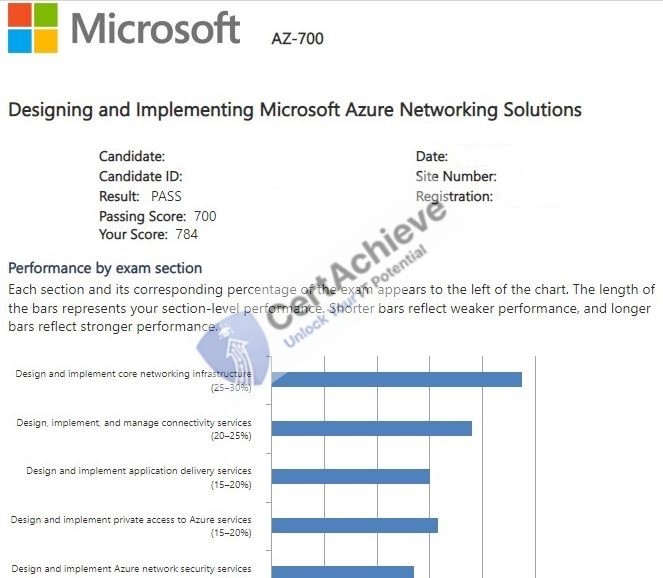
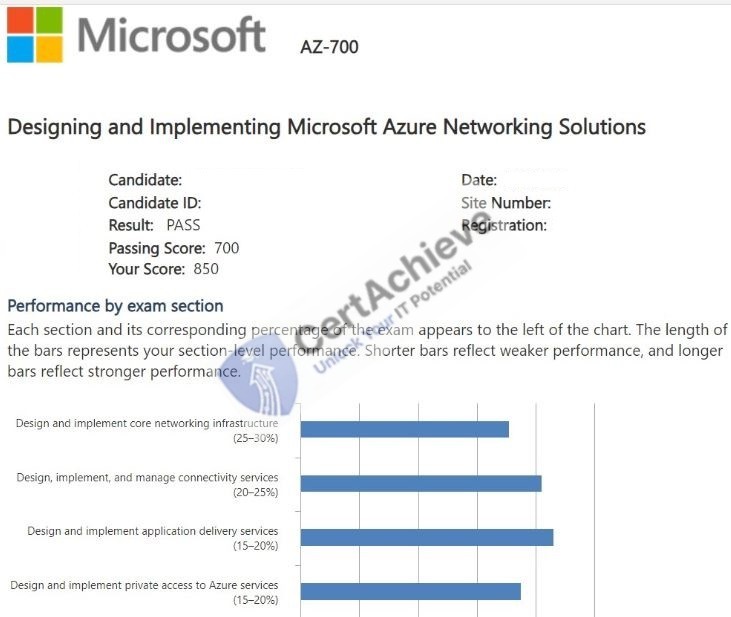
Authentic score reports from candidates who cleared the AZ-700 exam.
Verified Case #1
Verified Case #2
Verified Case #3
Verified Case #4
×
![]()