
The Salesforce Certified MuleSoft Integration Foundations (Mule-101)
Passing Salesforce Salesforce MuleSoft exam ensures for the successful candidate a powerful array of professional and personal benefits. The first and the foremost benefit comes with a global recognition that validates your knowledge and skills, making possible your entry into any organization of your choice.
Mule-101 Exam Dumps
- Exam Code: Mule-101
- Vendor: Salesforce
- Certifications: Salesforce MuleSoft
- Exam Name: Salesforce Certified MuleSoft Integration Foundations
Why CertAchieve is Better than Standard Mule-101 Dumps
In 2026, Salesforce uses variable topologies. Basic dumps will fail you.
| Quality Standard | Generic Dump Sites | CertAchieve Premium Prep |
|---|---|---|
| Technical Explanation | None (Answer Key Only) | Step-by-Step Expert Rationales |
| Syllabus Coverage | Often Outdated (v1.0) | 2026 Updated (Latest Syllabus) |
| Scenario Mastery | Blind Memorization | Conceptual Logic & Troubleshooting |
| Instructor Access | No Post-Sale Support | 24/7 Professional Help |
Customers Passed Exams
10
Success backed by proven exam prep tools
Questions Came Word for Word
93%
Real exam match rate reported by verified users
Average Score in Real Testing Centre
89%
Consistently high performance across certifications
Study Time Saved With CertAchieve
60%
Efficient prep that reduces study hours significantly
Coverage of Official Salesforce Mule-101 Exam Domains
Our curriculum is meticulously mapped to the Salesforce official blueprint.
Application Networks and API-Led Connectivity (25%)
Master the concept of the "Modern API" and the three-layered architecture (System, Process, and Experience APIs). Understand how an application network increases IT agility and reuse.
Anypoint Platform Architecture (20%)
Identify the core components of the Anypoint Platform. Deep dive into the separation of the Control Plane and Runtime Plane, and the specific role of Anypoint Exchange in asset discovery.
The Full API Lifecycle (30%)
Mastering the end-to-end lifecycle: Designing API specifications in RAML or OAS, building implementations in Anypoint Studio, and managing/deploying via API Manager and Runtime Manager.
Integration Patterns and Connectors (15%)
Understanding foundational integration patterns such as Orchestration, Aggregation, and Routing. Identifying the use cases for standard connectors like HTTP, Database, and Salesforce.
Security, Governance, and Monitoring (10%)
Focus on securing APIs using policies (Rate Limiting, IP Whitelisting), the role of API Proxies, and basic monitoring of application performance in Anypoint Visualizer.
Salesforce Mule-101 Exam Domains Q&A
Certified instructors verify every question for 100% accuracy, providing detailed, step-by-step explanations for each.
Question 1
Salesforce Mule-101
QUESTION DESCRIPTION:
What is an advantage of using OAuth 2.0 client credentials and access tokens over only API keys for API authentication?
Correct Answer & Rationale:
Answer: A
Explanation:
Security Mechanisms:
API Keys (Client ID/Secret): These are static, long-lived credentials. If a Client Secret is stolen, you must reset it, update the application code, and redeploy—a painful process.
OAuth 2.0 (Access Tokens): The client uses the ID/Secret to request a temporary Access Token (TTL of usually 15-60 minutes).
The Advantage: The API client sends the token (not the secret) in the header. If this token is intercepted/compromised, it will expire shortly. The attacker cannot generate new tokens without the original Client Secret. Therefore, the underlying credentials remain safe, and you do not need to reissue them.
Question 2
Salesforce Mule-101
QUESTION DESCRIPTION:
According to MuleSoft, what action should an IT organization take regarding its technology assets in order to close the IT delivery gap?
Correct Answer & Rationale:
Answer: B
Explanation:
The Key to Speed: You cannot close the delivery gap by working harder (hiring more staff) or by creating custom code for every project (custom assets). You must leverage Reuse .
Discoverability is Critical: Reuse is impossible if developers don't know that an asset exists.
Anypoint Exchange: By publishing assets (APIs, connectors, fragments) to a central repository (Exchange) and making them searchable and documented, organizations enable "Self-Service." Developers can find what they need instantly, drastically reducing the time to deliver new projects.
Question 3
Salesforce Mule-101
QUESTION DESCRIPTION:
Which type of communication is managed by a service mesh in a microservices architecture?
Correct Answer & Rationale:
Answer: C
Explanation:
Service Mesh Definition: A service mesh is a dedicated infrastructure layer for handling service-to-service communication.
East-West Traffic: It is specifically designed to manage East-West traffic , which is the network traffic flowing inside the data center or cluster between different microservices.
Capabilities: It handles things like mutual TLS (mTLS) for security, retries, load balancing, and traffic control between these services without requiring changes to the application code itself.
Question 4
Salesforce Mule-101
QUESTION DESCRIPTION:
A MuleSoft developer must implement an API as a Mule application, run the application locally, and execute unit tests against the running application.
Correct Answer & Rationale:
Answer: C
Explanation:
Anypoint Studio: This is the desktop Integrated Development Environment (IDE) for MuleSoft.
Capabilities:
Implement: It provides the graphical interface to drag-and-drop connectors and configure flows.
Run Locally: It includes an embedded Mule Runtime engine, allowing developers to run and debug apps on their own machines.
Execute Unit Tests: It has MUnit fully integrated, allowing developers to run tests and see coverage reports directly in the IDE.
Why others are incorrect:
API Designer: Web-based tool for designing specs (RAML), not implementing logic or running local runtimes.
Anypoint CLI: Command-line tool for platform operations, not development/testing.
Question 5
Salesforce Mule-101
QUESTION DESCRIPTION:
An integration team follows MuleSoft's recommended approach to full lifecycle API development. 9
Correct Answer & Rationale:
Answer: A
Explanation:
(Note: The question implies "What is the next step after design/validation?" or "How is the spec used?". Based on the answer key A, the context is how the spec drives development).
Comprehensive and Detailed Explanation:
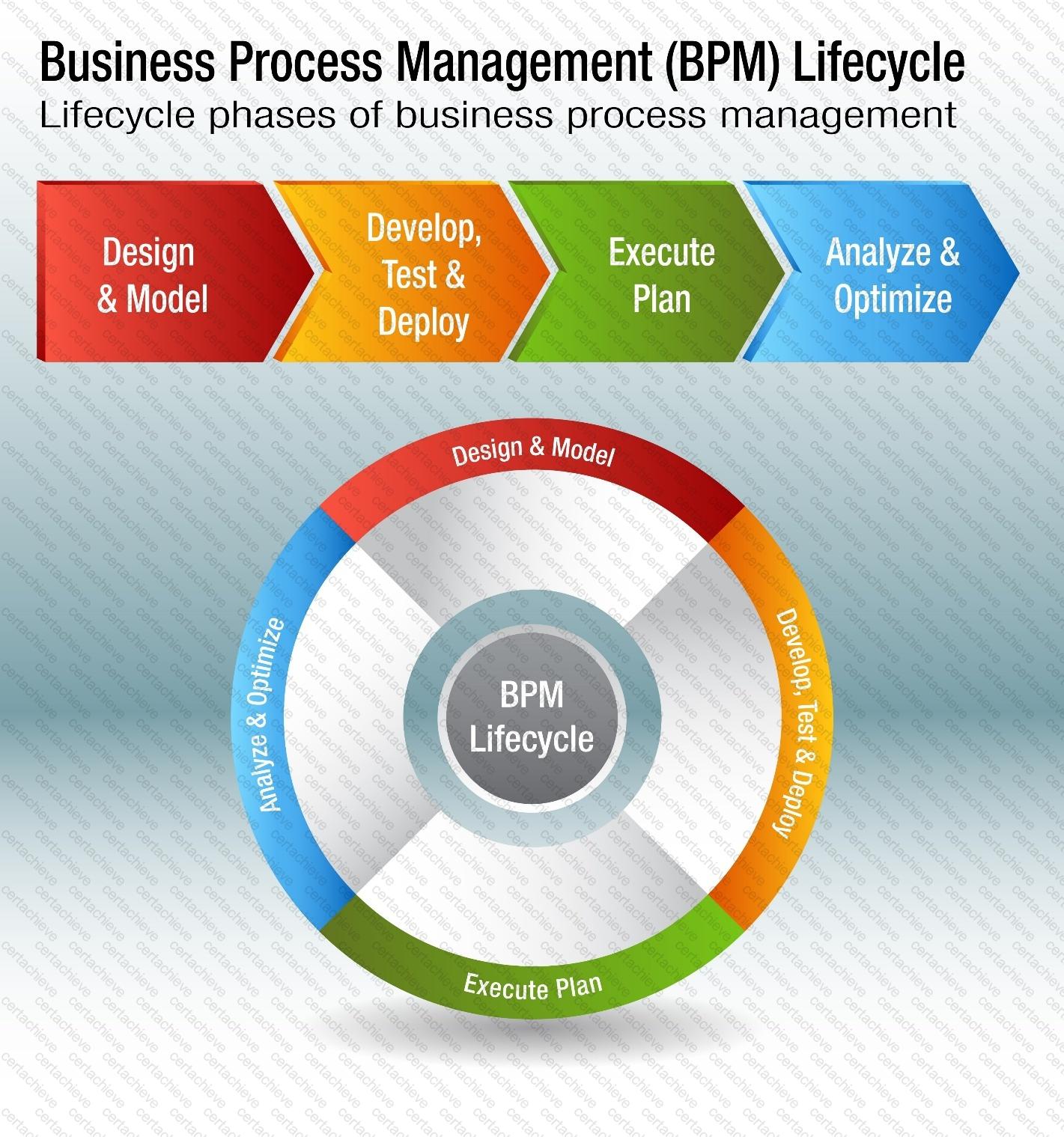 Image of MuleSoft API lifecycle
Shutterstock
Explore
API-Led Connectivity & Design-First: MuleSoft promotes a "Design-First" approach. You first write the RAML or OAS specification.
MuleSoft scaffolding: Once the specification is designed and published to Exchange, the developer imports it into Anypoint Studio. Studio then scaffolds (automatically generates) the Mule flows based on the API Specification.
The Workflow:
Design: Create the API contract (RAML/OAS).
Publish: Publish to Exchange.
Build (Answer A): Use the API specification to generate the flow structure (APIkit Router) and implement the logic.
This ensures the implementation strictly matches the design defined in the earlier phases.
Question 6
Salesforce Mule-101
QUESTION DESCRIPTION:
An organization is choosing between API-led connectivity and other integration approaches.
Correct Answer & Rationale:
Answer: A
Explanation:
The Value Proposition: A primary goal of API-led connectivity is to close the IT delivery gap. It achieves this by turning APIs into reusable Assets published to Exchange. 8
Self-Service: When assets are discoverable, other developers (e.g., Line of Business developers) can reuse them without waiting for central IT to build everything from scratch. This "Self-Service" model significantly increases overall developer productivity .
Why others are incorrect:
Tight Coupling (B): API-led promotes loose coupling. Tight coupling makes systems brittle and hard to change (Point-to-Point).
Centralized Development (C): Creates a bottleneck. API-led enables federated development.
Monolithic (D): API-led breaks monoliths into composable services (Microservices/APIs).
Question 7
Salesforce Mule-101
QUESTION DESCRIPTION:
According to MuleSoft, which major benefit does a Center for Enablement (C4E) provide for an enterprise and its lines of business?
Correct Answer & Rationale:
Answer: B
Explanation:
Center for Enablement (C4E): Unlike a Center of Excellence (CoE) which centralizes work , a C4E focuses on enablement .
Self-Service: The primary goal is to harvest reusable assets and best practices so that the Lines of Business (LOB) can build their own projects using these assets. This accelerates self-service and removes Central IT as the bottleneck 13 .
Why others are incorrect:
Centralizing Project Management (D): C4E promotes decentralized delivery (federation), not centralized management.
Question 8
Salesforce Mule-101
QUESTION DESCRIPTION:
What is a defining characteristic of an Integration-Platform-as-a-Service (IPaaS)?
Correct Answer & Rationale:
Answer: B
Explanation:
Definition of iPaaS: Gartner and MuleSoft define iPaaS (Integration Platform as a Service) as a suite of cloud services enabling the development, execution, and governance of integration flows connecting any combination of on-premises and cloud-based processes, services, applications, and data within individual or across multiple organizations.
The Key Characteristic: The "as a Service" suffix explicitly denotes a Cloud-based delivery model 111111111 .
MuleSoft Context: CloudHub is the iPaaS component of the Anypoint Platform. It is a fully managed, multi-tenant, cloud-based integration platform where you deploy API implementations without managing the underlying hardware.
Question 9
Salesforce Mule-101
QUESTION DESCRIPTION:
A key CI/CD capability of any enterprise solution is a testing framework to write and run repeatable tests.
Correct Answer & Rationale:
Answer: D
Explanation:
MUnit: This is the exclusive application testing framework for Mule 4 . It allows developers to build automated tests for their APIs and integrations.
CI/CD Integration: MUnit is designed to run as part of the continuous integration (CI) pipeline (usually executed via the Mule Maven Plugin during the build phase). If the MUnit tests fail, the build fails, preventing faulty code from deploying to production.
Why others are incorrect:
Exchange Mocking Service: Simulates an API based on RAML for design validation, not for testing the actual implementation logic.
Mule Maven Plugin: The tool that executes the build/deploy, but MUnit is the framework that writes/runs the tests.
Question 10
Salesforce Mule-101
QUESTION DESCRIPTION:
Which component of Anypoint Platform belongs to the platform control plane?
Correct Answer & Rationale:
Answer: D
Explanation:
Control Plane vs. Runtime Plane:
Control Plane: The set of components that manage, monitor, and design APIs and applications. This includes API Manager , Runtime Manager (the console), Anypoint Exchange, and Design Center 3 .
Runtime Plane: The infrastructure where the applications actually run (execute). This includes the Mule Runtime engine, Runtime Fabric , and CloudHub workers.
API Manager: It sits in the Control Plane and pushes policies (governance) down to the runtime engines (gateways).

Verified by Certified Instructors
This Salesforce Mule-101 study pack was audited and verified on September 23, 2026 by John Prescott,. We ensure every technical rationale aligns with real-world enterprise standards.
A Stepping Stone for Enhanced Career Opportunities
Your profile having Salesforce MuleSoft certification significantly enhances your credibility and marketability in all corners of the world. The best part is that your formal recognition pays you in terms of tangible career advancement. It helps you perform your desired job roles accompanied by a substantial increase in your regular income. Beyond the resume, your expertise imparts you confidence to act as a dependable professional to solve real-world business challenges.
Your success in Salesforce Mule-101 certification exam makes your visible and relevant in the fast-evolving tech landscape. It proves a lifelong investment in your career that give you not only a competitive advantage over your non-certified peers but also makes you eligible for a further relevant exams in your domain.
What You Need to Ace Salesforce Exam Mule-101
Achieving success in the Mule-101 Salesforce exam requires a blending of clear understanding of all the exam topics, practical skills, and practice of the actual format. There's no room for cramming information, memorizing facts or dependence on a few significant exam topics. It means your readiness for exam needs you develop a comprehensive grasp on the syllabus that includes theoretical as well as practical command.
Here is a comprehensive strategy layout to secure peak performance in Mule-101 certification exam:
- Develop a rock-solid theoretical clarity of the exam topics
- Begin with easier and more familiar topics of the exam syllabus
- Make sure your command on the fundamental concepts
- Focus your attention to understand why that matters
- Ensure hands-on practice as the exam tests your ability to apply knowledge
- Develop a study routine managing time because it can be a major time-sink if you are slow
- Find out a comprehensive and streamlined study resource for your help
Ensuring Outstanding Results in Exam Mule-101!
In the backdrop of the above prep strategy for Mule-101 Salesforce exam, your primary need is to find out a comprehensive study resource. It could otherwise be a daunting task to achieve exam success. The most important factor that must be kep in mind is make sure your reliance on a one particular resource instead of depending on multiple sources. It should be an all-inclusive resource that ensures conceptual explanations, hands-on practical exercises, and realistic assessment tools.
Certachieve: A Reliable All-inclusive Study Resource
Certachieve offers multiple study tools to do thorough and rewarding Mule-101 exam prep. Here's an overview of Certachieve's toolkit:
Salesforce Mule-101 PDF Study Guide
This premium guide contains a number of Salesforce Mule-101 exam questions and answers that give you a full coverage of the exam syllabus in easy language. The information provided efficiently guides the candidate's focus to the most critical topics. The supportive explanations and examples build both the knowledge and the practical confidence of the exam candidates required to confidently pass the exam. The demo of Salesforce Mule-101 study guide pdf free download is also available to examine the contents and quality of the study material.
Salesforce Mule-101 Practice Exams
Practicing the exam Mule-101 questions is one of the essential requirements of your exam preparation. To help you with this important task, Certachieve introduces Salesforce Mule-101 Testing Engine to simulate multiple real exam-like tests. They are of enormous value for developing your grasp and understanding your strengths and weaknesses in exam preparation and make up deficiencies in time.
These comprehensive materials are engineered to streamline your preparation process, providing a direct and efficient path to mastering the exam's requirements.
Salesforce Mule-101 exam dumps
These realistic dumps include the most significant questions that may be the part of your upcoming exam. Learning Mule-101 exam dumps can increase not only your chances of success but can also award you an outstanding score.
The Mule-101 Exam Dumps explained MuleSoft integration concepts, APIs, and deployment methods in a simple and understandable way. The testing engine was especially useful for revision.
Anthony Hughes
Jun 14, 2026
Top Exams & Certification Providers
New & Trending
- New Released Exams
- Related Exam
- Hot Vendor